The Promise
On a girl in Iowa and the promise that followed her South

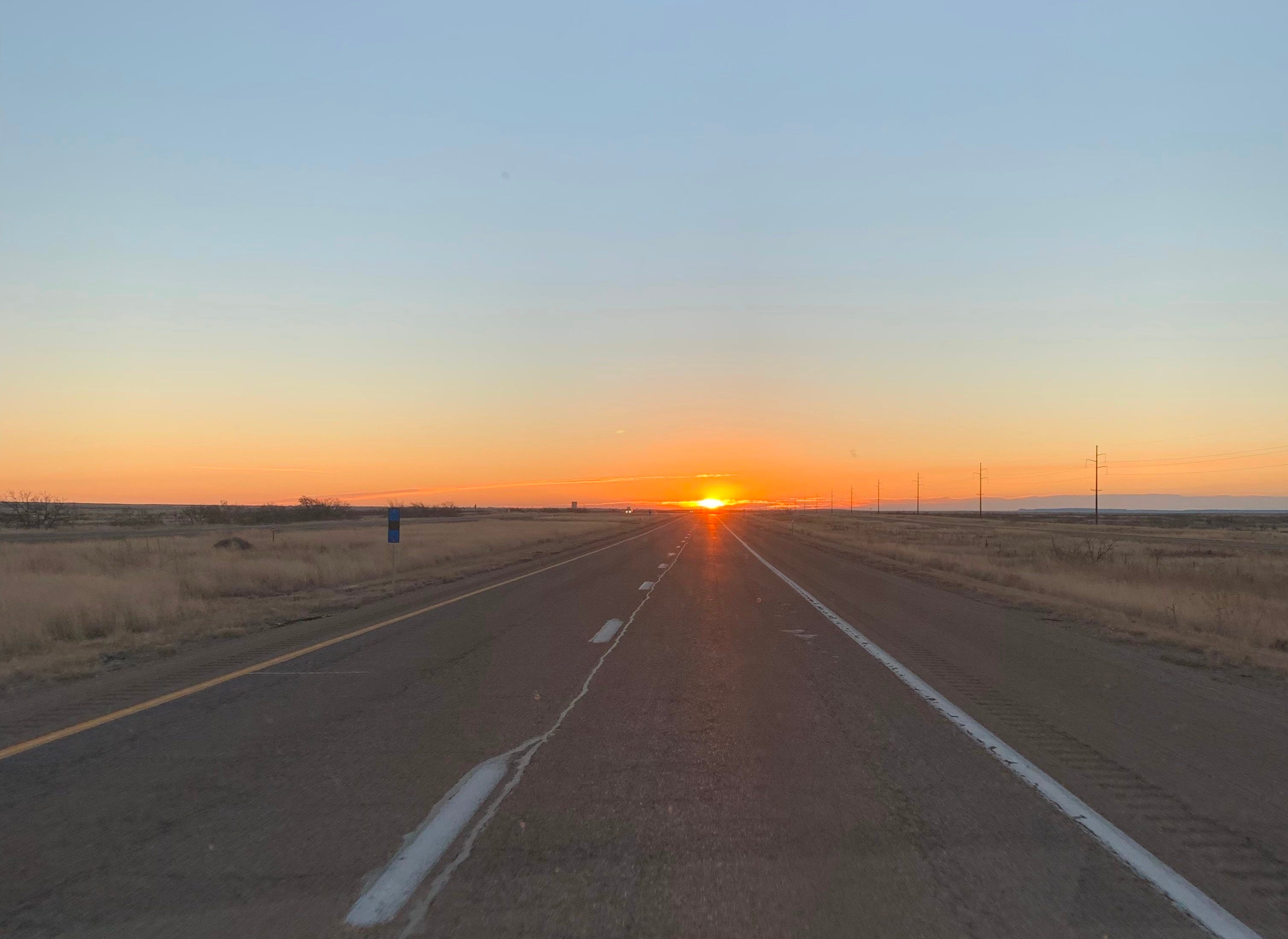
I am an hour north of Memphis in Annie Oakley, my Winnebago Travato, alone for the first time in months. Steve is home with the dog. The sheets are washed, the cabinets latched. Annie Oakley came into my life during the years when flying no longer felt possible. Since then, the road has become a place where I can hear myself think.
The road is doing what I asked of it. Emptying me out.
Yesterday, in Selma, there was a rally. I might have gone. I did not.
Instead, I am driving toward Omaha, where my mother grew up, where my family still lives, where I will spend a few days at the kitchen table of the people I love. Tonight I will sleep at an RV park in Nevada, Missouri. I have made this drive before. I did not understand until this morning that I have been making it my whole life.
In 1965, I was nine years old. We lived in Charles City, Iowa, a town with no Black families and little understanding of the country beyond its own horizon.
Every evening I came in from outside when my father returned home from work, and every evening I took my place on the floor in front of his chair, my back against it, my own legs stretched near his. I liked being near him. My mother sat on the couch adjacent. The television, black-and-white, was tuned to Walter Cronkite.
On the night I am telling you about, Cronkite was reporting from Selma.
I could not have explained what I was seeing. I knew only that people on a bridge were being hurt, and that the men hurting them looked like men I knew. Men who pumped gas. Men who bagged groceries. Men who nodded to my father on Main Street.
That night, I waited for my mother to come upstairs. When she sat on the edge of my bed, I asked her what it meant.
She told me about racism.
She told me that when she was a girl in Omaha, she had seen a white businessman stop on a public street in broad daylight and spit on a Black man.
I burst into tears.
I told her it wasn’t right. I told her I would do everything in my power to change it. I do not know whether she believed me. I do not know whether I understood what I was saying. I know only that after she left the room and closed the door, I cried into my pillow for a very long time, and when the crying was over, I had become a person to whom a promise had been made.
By me, to me.
In the dark.
I did not meet a Black person face-to-face until I was 12 years old, at a music camp in Des Moines. By twenty-two, I had left Iowa for the South, and I have lived there ever since.
Until this spring, I had never wondered whether I could stay.
The Supreme Court decision came first. Then, Tennessee moved quickly afterward. Maps were redrawn. Memphis was carved up. I read Heather Cox Richardson late one night the way you read a letter from a doctor: already knowing, before opening it, that something inside your life is about to change shape.
The racism my mother described to me at the edge of my bed had never disappeared. It had changed clothes. Changed language. Changed faces. But it had remained, patient beneath the surface of the country, waiting.
And for the first time in forty-seven years in the South, I wondered whether I had the strength for another season of it.
This is the question I have been driving with.
And this morning, somewhere between Memphis and the Missouri line, I understood that I am not going to leave.
It is not because I am brave or that I believe I will win. But because of a girl in Iowa who made a promise to her pillow in 1965 and has been keeping it ever since.
The promise is older than my marriage. Older than my children. Older than my work. Older than grief itself.
It is the oldest part of me.
And I realized, driving north through the flat green middle of the country, that nearly everything I have done has been an answer to the same question.
Miss Moody. LeMoyne-Owen College. Team Max. Deliveries in Nutbush. Essays written late at night this past year, while the country seemed to be coming apart molecule by molecule.
All of it answering the same question my mother asked without asking:
What will you do, now that you know?
I am driving to Omaha. My mother is gone. The businessman she saw is gone. The Black man he spat on is probably gone, too. The bridge at Selma has been crossed and crossed again. The men who beat the marchers in 1965 are old men now, or gone, and their grandsons are drawing district maps.
What has changed is not the promise but my understanding of it.
As a child, I thought the fight had an ending. I thought justice was a thing a country eventually arrived at if enough people suffered for it. I thought history bent because it wanted to.
I no longer believe that.
I think now that each generation is asked the same question in a different language. I think there are moments when history opens briefly in front of you and asks who you are. I think most of us answer before we even understand the question.
I answered mine in the dark in 1965.
Tonight I will sleep in Missouri. Tomorrow I will arrive in Omaha, the city where my mother first saw the thing I would spend my life trying to change. I will sit at my sister’s kitchen table. I will sit with the people I love. In a few days, I will drive south again to the place I am not going to leave.
Last Friday, people in Memphis asked me whether I still intended to stay in the fight. I told them I would think about it.
I am thinking about it now.
I will stay.
I do not know for how long, or to what end. I know only that the promise is still alive.
But somewhere tonight, a child is lying awake in the dark. She has seen something on a screen she does not yet understand. Her mother has come and gone. The door is closed. She is crying into her pillow.
And when the crying is over, the promise will belong to her.
I will never know her name.
What I know is that I am driving to Omaha. The road is empty.
The promise is not.
I made a promise to myself the day our president was assonated in November of 63 and my fraternity brothers celebrated that night. I left the South the following Summer and joined the Peace Corps. I returned to Memphis 10 years later…..and stayed.
I am glad, your strength and belief in doing what is right is needed now more than ever. Here with you!!